Foreword p. 4
This section outlines representative ways electronic musicians use technologies to record, process, and generate music. We discuss basic concepts such as sound synthesis and sound processing, both in real-time and non-real time.
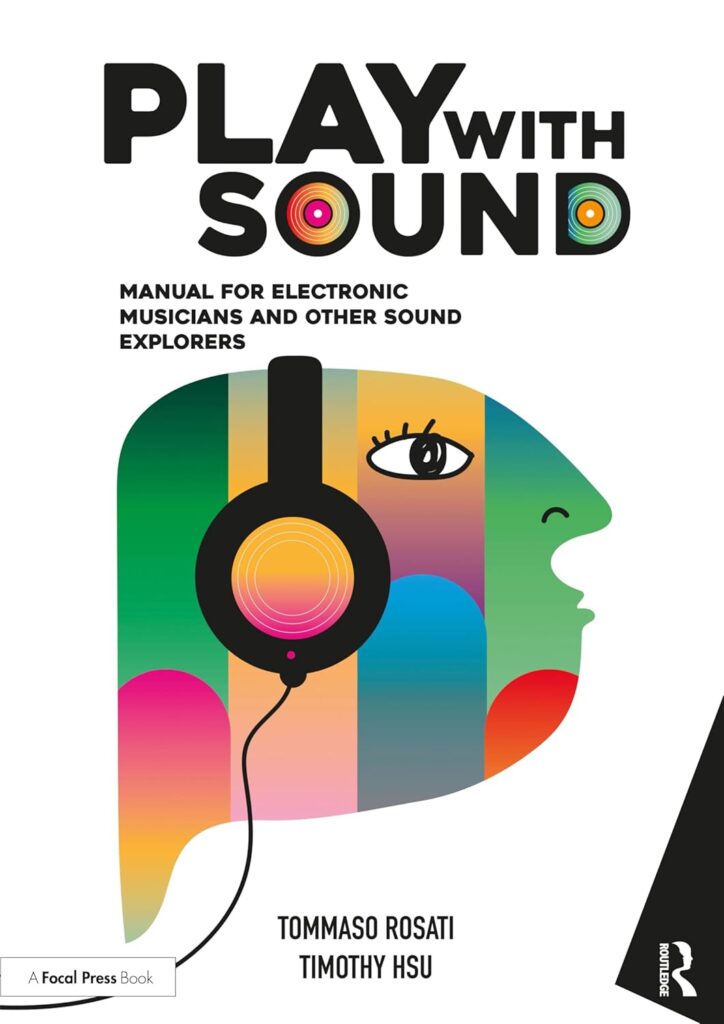
Manual for Electronic Musicians and Other Sound Explorers offers a thorough introduction to music technology by centering on curiosity and creativity in the exploration of the fundamentals of sound.
This book covers topics regarding audio software, acoustical principles, electroacoustic systems, audio processing, sound synthesis, and communication protocols.
Here you will find additional FREE digital resources. You can find the book in every store, online and offline.
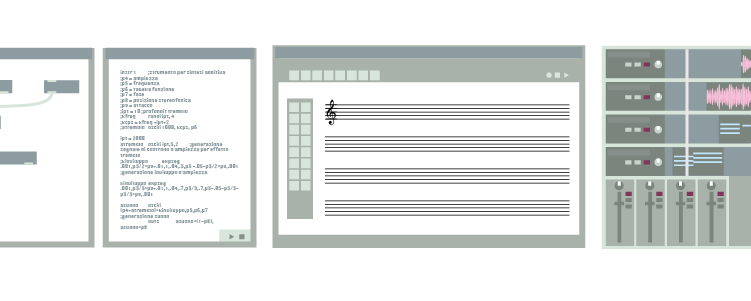
This section outlines representative ways electronic musicians use technologies to record, process, and generate music. We discuss basic concepts such as sound synthesis and sound processing, both in real-time and non-real time.
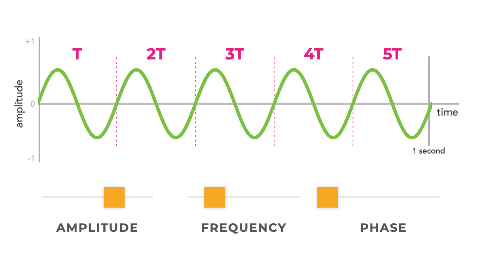
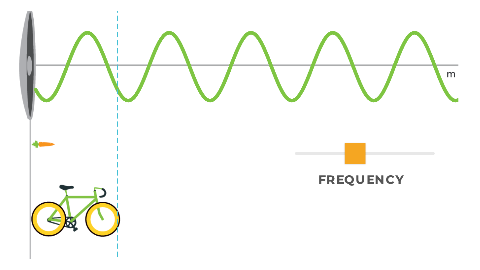
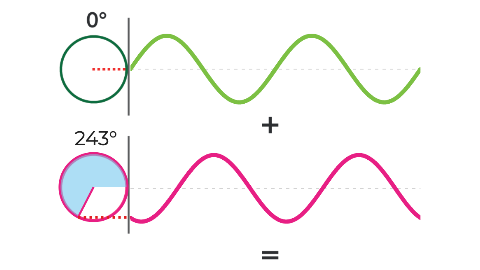
In these chapters, we give an overview of the physics of sound with all its characteristics. We clarify the concepts of Frequency, Amplitude, and Phase of a wave and then discuss timbre.
This section provides an overview of electroacoustic systems, including signal flow and all associated devices such as microphones, mixers, pickups, speakers, and cables.
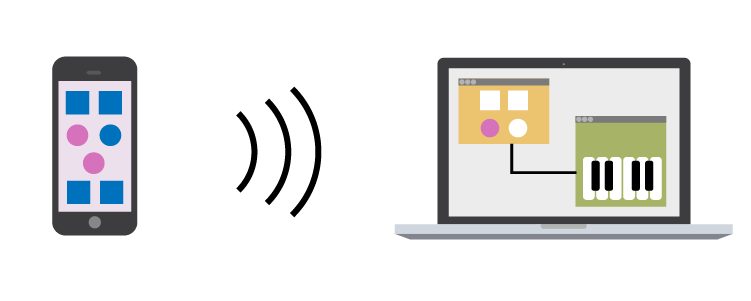
We address the main communication protocols that drive electronic instruments or effects: MIDI and OSC.
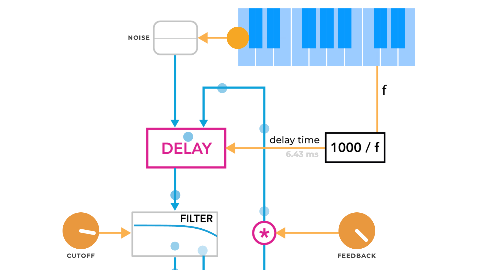
In this section, we discuss sound processing algorithms and techniques: filters, delay, dynamic processors, distortion, reverb, and spatialization.
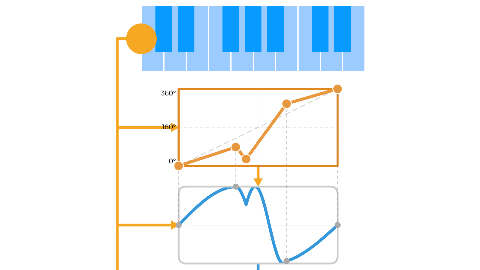
We illustrate techniques and algorithms of various sound synthesis methods: additive, subtractive, modulation, phase distortion, waveshaping, wavetable, physical modeling, granular, and sample synthesis.
The book contains 79 creative exercises designed to help you explore electronic music concepts through hands-on practice. Each exercise is connected to specific topics covered in the chapters and encourages experimentation and creativity.
Use the random exercise generator to discover new challenges, filter by topic, and get inspired with creative themes!
Try ExercisesAdditional teaching materials by the author, complementing the book
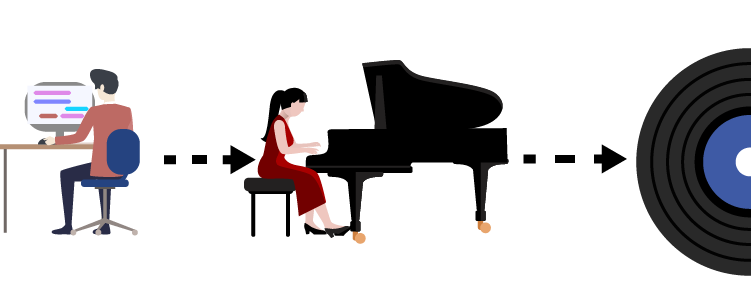
Several electroacoustic composition techniques are described in this section. (Note: This material is in Italian only)
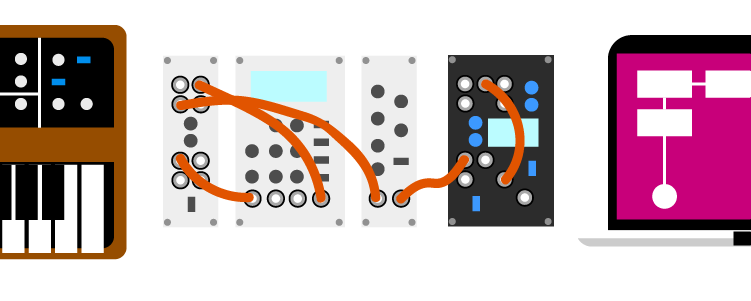
We look at the history of electroacoustic music, from the first recording devices up to digital music and spectralism. (Note: This material is in Italian only)
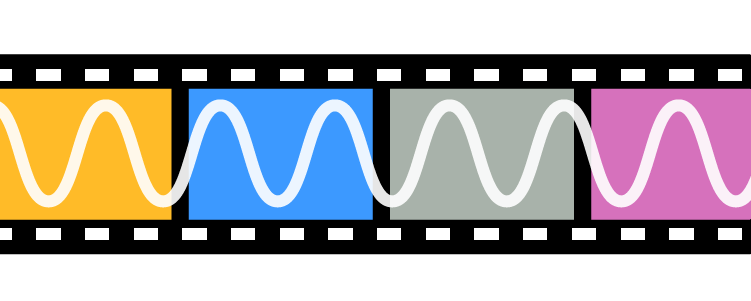
In this section we look at the main approaches of how sound and video are merged together in multimedia design. (Note: Italian only)
Record and edit audio. FREE and open source.

DAW (Digital Audio Workstation). FREE to evaluate.

Visual programming language. FREE and open source.
Visual object programming by Cycling 74.
Analysis/resynthesis audio processor. FREE.
Music notation software. FREE.
Reaper plugins
*The authors have no relationship with the companies that own these programs.
Pierre Schaeffer – Treatise on Musical Objects (1966) – University of California Press, 2017
R. Murray Schäfer – The Soundscape: Our Sonic Environment – Inner Traditions, 1993
Curtis Roads – The Computer Music Tutorial – MIT Press, 1995
Alex Ross – The Rest Is Noise – Picador, 2008
Andrea Cremaschi, Francesco Giomi – Rumore bianco – Zanichelli, 2008
Iannis Xenakis – Music and Architecture – Pendragon Press, 2008
Enrico Cosimi – Manuale di musica elettronica – Tecniche Nuove, 2011
Leonello Tarabella – Musica Informatica – Maggioli, 2014
Dennis DeSantis – Making Music – Ableton AG, 2015
Alessandro Cipriani, Maurizio Giri – Electronic Music and Sound Design Vol.1 & 2 – ConTempoNet, 2019-2020
Mark Fell – Structure and Synthesis – Urbanomic, 2021
Tommaso Rosati – Suono Elettronico – Volontè&Co. 2023
Play with Sound is designed for students of electronic music and music technology, producers and musicians who want to deepen their theoretical understanding, and teachers looking for ready-to-use classroom materials.
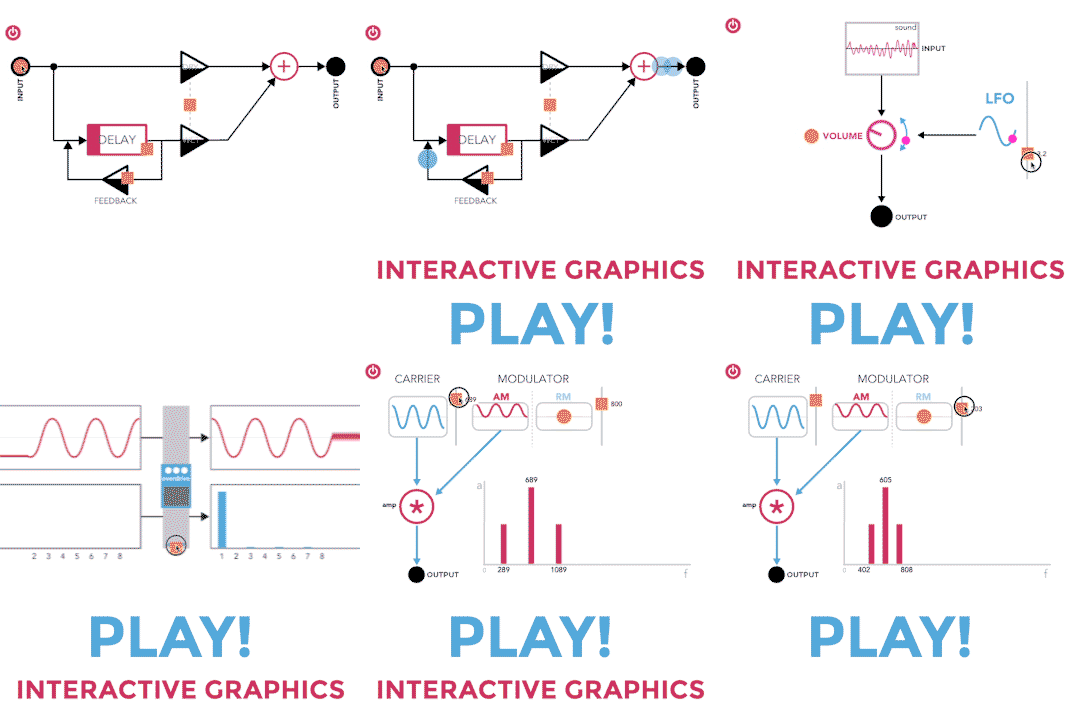
The free companion on this site includes interactive graphics and slide decks structured for lessons. It's also a great starting point for anyone curious about how electronic sound works — no prior knowledge required.
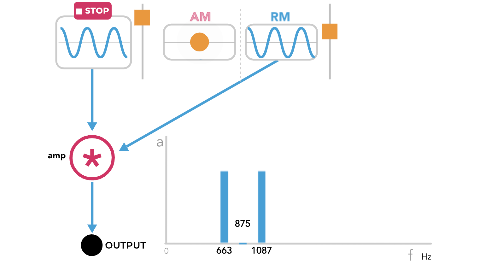
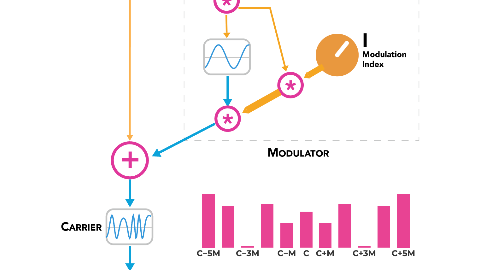
The book covers: acoustics and psychoacoustics, the electroacoustic chain (microphones, speakers, ADC/DAC), sampling and quantization, audio compression, sound processing (filters, delay, distortion, gate), sound synthesis (subtractive, additive, FM, AM/RM, waveshaping, Karplus-Strong), MIDI and OSC.
Yes. The book starts from the basics of acoustics and builds concepts step by step. The interactive graphics help anyone new to electronic music visualize abstract ideas like pitch, timbre, or phase from the very first chapter.
At the same time, chapters on FM synthesis, waveshaping, and Karplus-Strong offer depth for more experienced readers.
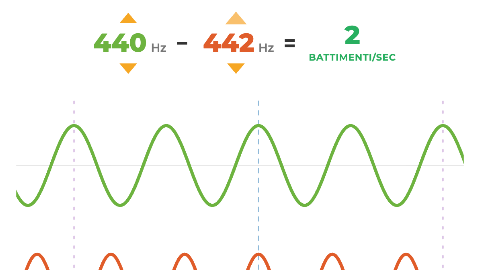
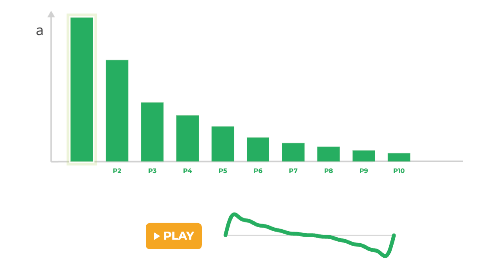
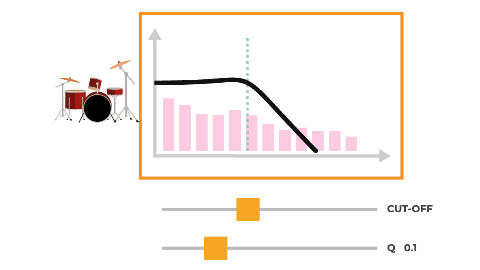
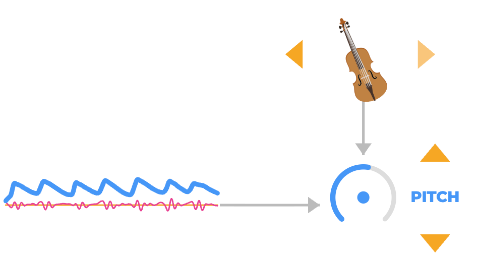
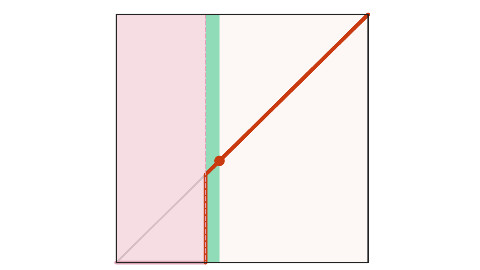
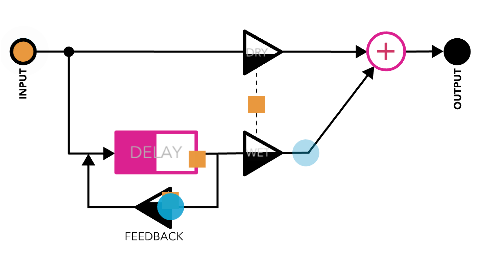
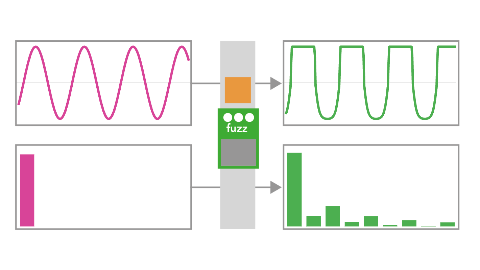
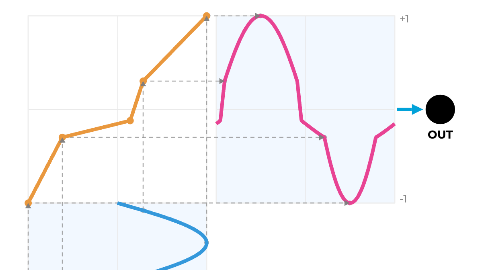
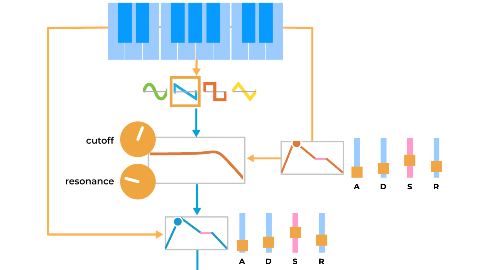
Imagine hearing a filter sweep while you drag the cutoff, or watching the frequency spectrum shift in real time as you add harmonics. The interactive graphics are exactly that: audiovisual tools that make sound synthesis and music technology tangible.
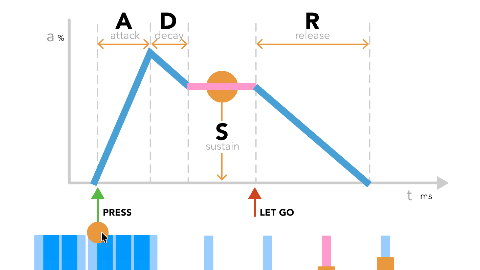
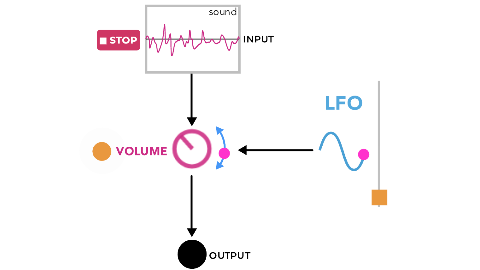
Move a parameter, hear the result instantly. Processes like LFO, ADSR, delay, distortion, and modulation stop being abstract theory and become direct experience.
For students, it's the difference between understanding and really getting it. For teachers, a way to make a lesson stick.
Ever tried explaining what a filter does and found that words just weren't cutting it?
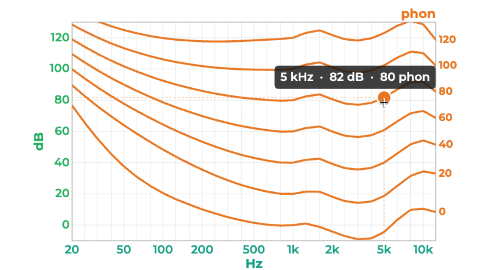
Many electronic music concepts are dynamic — they happen over time, they're meant to be heard, and no static diagram really captures them. The interactive graphics connect sight, sound, and interaction — cutting through cognitive overload and making every concept click faster.
Use them whenever a sound concept is easier to grasp if you can hear and shape it live: sound synthesis, modulation, audio effects, sound design, music technology.
No. The book's free companion content — interactive graphics and slide decks for lessons — runs directly in your browser, on desktop, tablet, and smartphone, with nothing to install and no account needed.
Play with Sound is available at all major bookshops and online retailers. Here are the details for the print edition:
Yes! Here are the details for the e-book edition: